


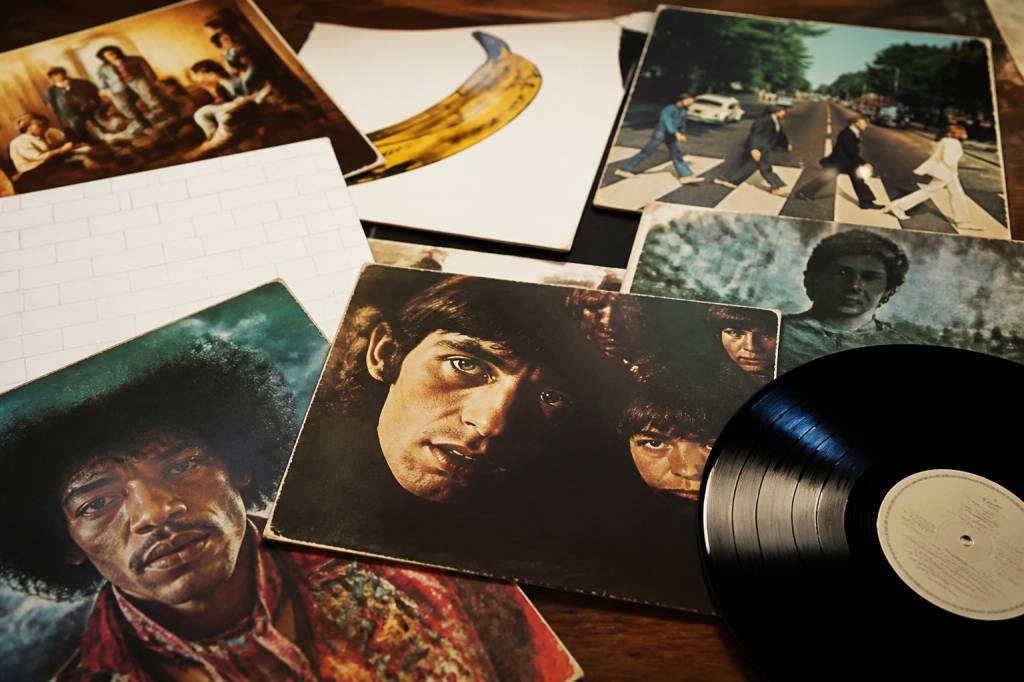
The 1970s did not just produce great albums. It produced the kind of records that rewired the business, the culture, and the expectations around what rock, soul, and pop could do. This was the decade when albums stopped being merely collections of songs and became statements of identity, ambition, and sometimes survival. Some were commercially enormous, some were critical detonations, and some were both. All of them helped define a generation that was listening differently, buying differently, and, in a few cases, living differently because of what came out of the speakers.
What made the 1970s so fertile? A few things lined up at once: FM radio expanded album-oriented listening, studios became more sophisticated and more expensive, and artists gained leverage after the late-1960s shift in rock economics. The result was a decade of long-form creativity. If the 1960s gave us the blueprint, the 1970s built the house, added a second floor, and then argued about the paint color.
Here are the albums that, in rock, soul, and pop, did more than succeed. They defined the temperature of the room.
Fleetwood Mac – Rumours
Released in 1977, Rumours is the rare blockbuster that still sounds like a live wire. The backstory is famous for a reason: breakups, resentment, friction, and a studio atmosphere so tense it could probably power a city block. Yet the music never feels trapped by that drama. It transforms it.
Every track is engineered for emotional precision. “Go Your Own Way” and “Dreams” became enduring singles because they cut cleanly through the noise. The production is immaculate, but not sterile. Mick Fleetwood and John McVie lock the rhythm section into a pulse that gives Stevie Nicks, Lindsey Buckingham, and Christine McVie room to make their private heartbreak feel universal.
Rumours sold in absurd numbers and still ranks among the best-selling albums of all time. More importantly, it became a template for how personal conflict could be turned into mainstream art without losing its bite. Not bad for an album made by people who were, in many cases, barely speaking to each other.
Stevie Wonder – Songs in the Key of Life
If the 1970s had a single album that embodied artistic ambition without compromise, this was it. Released in 1976, Songs in the Key of Life is sprawling, political, tender, and musically fearless. It moves from ecstatic funk to quiet reflection, from social commentary to family portraiture, often within a few minutes.
Wonder was already a major force, but this album made the case that pop could be both expansive and deeply purposeful. “Sir Duke” celebrates musical lineage with rare joy. “Isn’t She Lovely” is a straightforward love song that somehow feels monumental. “Village Ghetto Land” and “Black Man” push into sharper social territory without turning into lectures.
The album also mattered because it arrived at a time when soul and pop were often being boxed into separate commercial lanes. Wonder ignored the boxes. He simply wrote better songs than the boxes could contain. That is usually how the important records age.
Marvin Gaye – What’s Going On
By 1971, Marvin Gaye had no reason to be expected to make an album like this. Motown had built him as a hitmaker, not a prophet. Then What’s Going On appeared and changed the terms. It was smooth, yes, but never soft. Its beauty is inseparable from its urgency.
Inspired by social unrest, environmental anxiety, and Gaye’s own disillusionment, the album asks a simple question and refuses easy answers. The title track remains one of the great opening statements in popular music: elegant, wounded, and immediately memorable. From there, Gaye builds a cycle of songs that feel connected not by plot, but by moral pressure.
In soul music, the voice has always carried authority. Here, Gaye uses that authority to ask whether love, protest, and faith can still hold together in a fractured world. The answer is not tidy. That is why the album still matters.
David Bowie – The Rise and Fall of Ziggy Stardust and the Spiders from Mars
In 1972, Bowie did more than release an album. He introduced a character that made reinvention itself part of the performance. Ziggy Stardust fused glam rock theatrics with a sharp-eyed sense of alienation, sexual ambiguity, and celebrity collapse. The songs are catchy, but they are never just catchy. They are small dramatic scenes.
“Starman” is the obvious entry point, but the album works because the entire sequence is built with intention. Bowie understood that rock was no longer only about authenticity in the old sense. It was about construction, costume, and control. He used those tools brilliantly.
For a generation coming of age amid shifting gender norms and a changing media landscape, Bowie offered a new model of star power: unstable, intelligent, and thrillingly unresolved. The fact that it still feels modern says plenty.
Led Zeppelin – IV
Officially untitled, universally known as Led Zeppelin IV, this 1971 release helped define what hard rock could sound like at full scale. “Black Dog,” “Rock and Roll,” and “When the Levee Breaks” are not just heavy. They are massive, each in a different way.
The album’s center of gravity is “Stairway to Heaven,” a song that became so overplayed, analyzed, and mythologized that it now risks sounding like a punchline. Strip away the baggage, though, and it remains a remarkable piece of arrangement and escalation. The track moves with a patience many rock songs never attempt.
What made the album generational was its blend of brute force and mysticism. Led Zeppelin never fully fit the image of a socially conscious band, but they understood spectacle, atmosphere, and the power of scale. In the 1970s, that was enough to make them unavoidable.
Michael Jackson – Off the Wall
Yes, it arrived in 1979, just before the decade turned, but Off the Wall belongs in any serious account of what the 1970s delivered. This was the album where Michael Jackson stepped out of the shadow of child stardom and into adult pop brilliance. Working with Quincy Jones, he delivered a record that was sleek, disciplined, and full of confidence.
What makes Off the Wall so important is that it bridges eras. It draws from disco, funk, pop, and R&B without sounding like a compromise. “Don’t Stop ’Til You Get Enough” is pure kinetic release. “Rock with You” is all controlled glow. Jackson’s vocal performance is the key: agile, playful, and just grounded enough to make the shine believable.
The album also previewed the scale of the solo career that would follow. By the end of the decade, Jackson was no longer simply promising something bigger. He had begun delivering it.
Al Green – Call Me
Released in 1973, Call Me is one of soul music’s clearest statements of emotional intimacy. Al Green had a gift for making vulnerability sound effortless, which is far harder than it looks. This album, produced with Willie Mitchell’s signature restraint, is rich without feeling crowded.
Tracks like “Here I Am (Come and Take Me)” and “Call Me (Come Back Home)” show Green at his peak: smooth but never detached, romantic but not generic. His phrasing does the heavy lifting. He can suggest longing in a single line where other singers need an entire verse.
What separates Call Me from lesser soul records of the period is its confidence in space. It does not need to overwhelm you. It simply waits for the room to quiet down and then lands the emotional hit. That is craftsmanship.
Pink Floyd – The Dark Side of the Moon
Few albums from any decade have become as culturally omnipresent as The Dark Side of the Moon. Released in 1973, it was not just an artistic triumph. It was a commercial phenomenon that stayed on charts for years and became a reference point for anyone serious about album listening.
Thematically, it is about pressure: time, greed, mental strain, mortality. Sonically, it is a masterclass in atmosphere and sequencing. “Money” gave the band a radio-friendly edge, but the record’s real power lies in how seamlessly it moves from one emotional state to another.
It helped define progressive rock for the mainstream without losing its experimental identity. That balance is rare. Most albums either court accessibility or chase complexity. This one managed both, which is why it still sells, still streams, and still gets handed down like a family secret.
Aretha Franklin – Young, Gifted and Black
Aretha Franklin’s 1972 album Young, Gifted and Black captured her in a period of commanding vocal authority and cultural relevance. The title alone signaled ambition, but the album goes further by blending resilience, tenderness, and force. Franklin was never just interpreting songs. She was claiming them.
Her version of “A Brand New Me” is a perfect example of how she could take material from others and make it feel definitive. The title track, associated with Nina Simone’s broader cultural legacy, becomes in Franklin’s hands a statement of dignity and power. There is no theatrical excess here. The power comes from control.
In a decade when Black women were still fighting for visibility across the industry, Franklin’s success was not just commercial. It was structural. She remained a benchmark for what popular music could sound like when authority and vulnerability came from the same voice.
Bruce Springsteen – Born to Run
Released in 1975, Born to Run was the moment Bruce Springsteen crossed from regional promise to national obsession. It is an album obsessed with escape, with cars, roads, late-night promises, and the possibility that somewhere beyond the horizon, life might be less boxed in.
The title track is one of rock’s great acts of compression: dense, cinematic, and emotionally huge. The rest of the album follows the same logic. Springsteen writes like someone trying to outrun time itself. The characters may be stuck, but the music never is.
What made the album resonate so strongly was not just its sound, but its scale of aspiration. Springsteen made working-class restlessness feel epic. That is a hard trick to pull off without sounding inflated. He managed it because the songs never let the emotion drift away from the detail.
Carole King – Tapestry
Released in 1971, Tapestry is often described as intimate, and that is true, but intimacy alone does not explain its reach. Carole King wrote songs that sounded personal while remaining instantly legible to millions of listeners. That is a much more difficult balance than it gets credit for.
“It’s Too Late,” “I Feel the Earth Move,” and “You’ve Got a Friend” are all different shades of emotional intelligence. The arrangements are uncluttered, which leaves King’s voice and piano playing exposed in the best way. The album does not perform vulnerability. It inhabits it.
It also mattered historically because it proved that singer-songwriters, especially women, could dominate the mainstream without adopting rock’s louder postures. The album spent months at the top of the charts for good reason. It was direct, humane, and impossible to fake.
Why these albums still matter
The best 1970s albums did more than reflect their era. They helped define how listeners understood artistry, identity, and scale. In rock, they expanded the possibilities of drama and texture. In soul, they pushed emotional and political depth into the center of popular music. In pop, they showed that precision and mass appeal were not opposites.
They also arrived at a time when the album itself was king. Streaming-era listeners often consume songs as isolated units, but the 1970s rewarded sequencing, pacing, and the arc of the full record. That is part of why these albums still feel substantial today. They were built as complete statements, not just as platforms for a lead single.
If there is a thread running through all of them, it is this: they trusted listeners to keep up. They did not simplify their ambitions to fit the market. They expanded the market to fit the ambition. That is the kind of influence that lasts far beyond the decade that produced it.
And if you are wondering which one belongs at the top of the list, the honest answer is that the debate is part of the fun. Ask ten music fans and you will get ten different rankings, plus a heated argument about sequencing, production, or whether one overlooked deep cut deserves more respect. That is exactly how a canon should behave.