

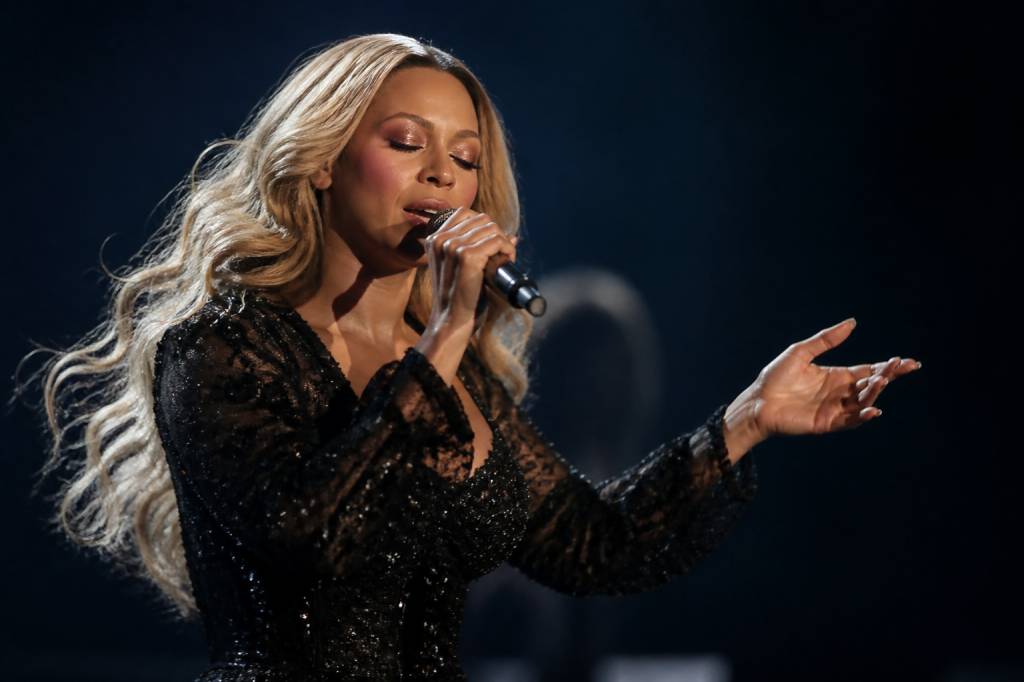
There is no scientific way to rank the world’s greatest singers. Vocal range matters, but so do phrasing, emotional control, cultural influence and the ability to make a song feel instantly identifiable. A technically flawless performance can still leave listeners cold; a slightly cracked vocal can become unforgettable.
The following ten artists are not presented as a definitive hierarchy. They represent different approaches to modern singing: powerhouse belting, intimate whispering, rhythmic precision, genre crossover and songwriting-led performance. Together, they show how the global pop landscape has changed—and where it may be heading next.
Beyoncé: precision, power and total command
Beyoncé remains one of the defining vocalists of the 21st century because she combines several skills that rarely coexist at the same level. She can deliver a controlled R&B run, a full-bodied belt, a precise dance performance and a carefully staged live show without allowing one element to undermine another.
Her voice is especially effective because of its flexibility. On “Love on Top,” she turns a sequence of key changes into a display of stamina and pitch control. On “Sandcastles,” the performance is more exposed, with fragility replacing spectacle. On “Alien Superstar” and “My House,” she uses rhythm and attitude as much as traditional vocal power.
Beyoncé’s influence also extends beyond singing. Her visual albums, surprise releases and tightly controlled performances changed the expectations placed on major pop artists. The 2013 self-titled album demonstrated that an artist could bypass conventional promotion and still create a global event. Her 2016 album Lemonade pushed popular music toward a more ambitious combination of autobiography, politics and visual storytelling.
Her voice is not simply large. It is disciplined, strategic and built for both intimacy and stadium scale.
Adele: emotional clarity without vocal excess
Adele’s strength is not based on constant vocal acrobatics. It comes from phrasing. She understands how long to hold a note, when to pull back and how to let silence carry part of the emotional weight. That restraint has made songs such as “Someone Like You,” “Hello” and “Easy on Me” remarkably durable.
Her lower register gives her performances warmth and conversational credibility, while her upper range provides the necessary lift at key moments. She does not decorate every line. Instead, she builds a song around the emotional meaning of the lyric, then allows the voice to expand when the story requires it.
That approach has translated into extraordinary commercial success. Her album 21 became one of the best-selling albums of the 21st century, driven by songs that relied on piano, voice and direct emotional communication rather than dense production. In an era of heavily layered recordings, Adele has repeatedly reminded the industry that an unambiguous melody can still dominate global listening habits.
Her live performances also reveal an important quality: control under pressure. Adele’s voice is powerful, but the real achievement is the sense that every note serves the song rather than the singer’s ego.
The Weeknd: a falsetto built for the digital age
The Weeknd has helped redefine the sound of contemporary pop and R&B. His voice moves between a smooth, high falsetto and a darker chest register, creating a contrast that is central to his identity. The effect is polished but uneasy—an ideal match for songs about nightlife, excess, loneliness and emotional detachment.
“Blinding Lights” became a global phenomenon because it paired that distinctive voice with an instantly recognizable synth-pop framework. The song’s success was not an accident of nostalgia. It showed how an artist could borrow the emotional vocabulary of 1980s pop while presenting it through modern production and streaming-era momentum.
Earlier records such as House of Balloons established a more shadowy atmosphere, while albums including After Hours and Dawn FM expanded his ambitions into a coherent audiovisual world. His vocal performances often sound immaculate, but there is an intentional coldness beneath the surface.
The Weeknd’s influence is visible in the number of artists now using high-register vocals, minimalist darkness and cinematic production to create pop music with an R&B foundation. His voice is immediately recognizable, which remains one of the rarest advantages in a crowded market.
Ariana Grande: technical control at pop speed
Ariana Grande’s vocal technique is unusually visible in her recordings. Her whistle register, agile runs and breath control have made her a reference point for a generation of singers. Yet reducing her to high notes would miss the more important point: she knows how to use technical ability in service of melody.
On “Dangerous Woman,” she balances a controlled lower register with expansive choruses. “God Is a Woman” demonstrates her ability to make vocal layering feel theatrical without becoming cluttered. In “pov,” she adopts a softer delivery and allows vulnerability to replace vocal fireworks.
Grande’s sound sits at the intersection of contemporary R&B, classic pop and musical theatre. That combination explains why her performances can feel both technically precise and dramatically expressive. She has also shown an ear for vocal arrangement, often stacking harmonies to create a choir-like effect around the lead line.
Her influence is particularly clear on social media, where vocal covers and short-form performance clips have turned difficult runs into shareable cultural moments. The danger, of course, is that singers begin treating vocal difficulty as the entire point. Grande remains most compelling when the technique supports the emotional architecture of the song.
Billie Eilish: the power of understatement
Billie Eilish changed the popular understanding of what a major pop voice could sound like. Her delivery is often quiet, close-miked and deliberately restrained. Instead of projecting toward a stadium, she appears to sing directly into the listener’s ear.
That intimacy became a defining feature of When We All Fall Asleep, Where Do We Go?, an album created with her brother Finneas. Songs such as “bad guy” and “bury a friend” use breath, vocal layers and sharply controlled dynamics to create tension. The voice is not placed above the production; it becomes part of the production’s texture.
Eilish also understands the dramatic value of contrast. A whisper can make a later full-voice passage feel enormous. Her Oscar-winning song “What Was I Made For?” is built around vulnerability rather than obvious vocal display, proving that understatement can carry global cultural weight.
Her impact reaches beyond genre. Bedroom pop, alternative R&B and minimalist electronic production have all benefited from the wider acceptance of quieter vocal styles. Eilish did not make powerful singing obsolete. She expanded the definition of power.
Taylor Swift: the singer as storyteller
Taylor Swift is not primarily celebrated for vocal acrobatics, and that distinction matters. Her strength lies in narrative delivery, melodic instinct and an exceptional ability to make specific details feel universal.
From the country-influenced phrasing of her early work to the restrained pop of Folklore and the brighter textures of 1989, Swift has repeatedly adapted her vocal approach to the writing. “All Too Well” depends on conversational precision and gradual emotional escalation. “Cruel Summer” demands urgency and layered intensity. “Cardigan” uses softness to create atmosphere rather than to display range.
Her enormous influence is also tied to the relationship between songwriting and the music business. Swift has been central to debates about artist ownership, catalog value, streaming economics and the role of physical editions. Her decision to re-record earlier albums turned contractual history into a mainstream discussion about intellectual property.
Onstage, she has developed into a reliable large-scale performer capable of carrying long, demanding shows. Her voice is most effective when it sounds like an extension of the character speaking in the song. In that sense, Swift’s greatest vocal asset may be credibility.
Bruno Mars: the modern showman with a classic toolkit
Bruno Mars draws openly from soul, funk, pop, reggae and R&B, but his performances never feel like academic exercises. He makes historical references sound immediate. His vocal style combines clean high notes, rhythmic sharpness and a natural sense of swing.
“When I Was Your Man” places the voice at the center of a relatively sparse arrangement, while “24K Magic” uses swagger, layered harmonies and precise rhythmic phrasing. With Silk Sonic, his partnership with Anderson .Paak, Mars leaned further into the aesthetics of classic soul and funk without treating them as museum pieces.
His live performances are a crucial part of his artistic profile. Choreography, band interaction and vocal control work together, creating the kind of polished entertainment that once defined mainstream pop but is now less common. Mars understands that a great concert is not merely a sequence of songs; it is a negotiated relationship with the audience.
His appeal crosses generations because the references are clear but not limiting. He can sound retro without becoming trapped in retro style.
SZA: vulnerability with an elastic vocal identity
SZA has made uncertainty sound compelling. Her vocals move between conversational singing, airy head voice, elastic phrasing and sudden bursts of intensity. That instability mirrors the emotional world of her lyrics, where desire, insecurity, resentment and self-awareness often coexist.
On Ctrl, tracks such as “Drew Barrymore” and “The Weekend” established a voice that felt personal without being neatly polished. SOS broadened the palette, moving from intimate R&B to pop, hip-hop and more aggressive performances. “Kill Bill” became a major crossover success while preserving her unusual balance of sweetness and menace.
SZA’s influence is significant because she has helped normalize ambiguity in mainstream songwriting. Her characters do not always behave well, and her vocals do not always resolve neatly. That emotional messiness is part of the appeal.
Technically, she is compelling because her phrasing rarely follows the most predictable route. She bends a note, delays an entrance or lets a line fall away. The result feels less like a performance designed to impress and more like a thought being formed in real time.
Harry Styles: pop accessibility with rock instincts
Harry Styles has developed from boy-band vocalist into a solo performer with a flexible, recognizable sound. His voice is not built around extreme range; it relies on tone, phrasing and personality. A slight rasp can make a line feel lived-in, while a clean upper register gives his choruses lift.
“Sign of the Times” showed a willingness to embrace expansive, classic-rock-influenced songwriting. “As It Was,” by contrast, used a compact pop structure and bright production to create a song that travelled easily across markets. His album Harry’s House moved through soft rock, funk, synth-pop and intimate balladry without losing a consistent vocal center.
Styles’ appeal also comes from his ability to make vulnerability commercially accessible. He has helped bring flamboyant fashion, emotional openness and genre fluidity into the center of mainstream pop without presenting any of those elements as a marketing stunt.
His live voice benefits from a direct relationship with the crowd. He often sounds less interested in vocal perfection than in creating momentum, which can be more valuable in a large venue than another technically immaculate run.
Olivia Rodrigo: the voice of accelerated emotion
Olivia Rodrigo’s singing is built around emotional escalation. Her performances can shift from intimate and conversational to raw, forceful and almost theatrical within a single track. That contrast has helped her connect with listeners navigating heartbreak, confusion and the social pressure of growing up in public.
“drivers license” established her ability to make a relatively simple vocal line feel cinematic through careful dynamic control. “good 4 u” demonstrated a more aggressive pop-rock attack, while “vampire” allowed her to stretch phrases and build toward a dramatic release.
Rodrigo’s vocals are particularly effective because they preserve imperfection. A strained edge or sudden change in volume can communicate panic more convincingly than a perfectly smooth take. This is not a rejection of technique; it is technique used to create character.
Her rise also reflects the continuing importance of television, streaming and social platforms working together. A song can move from a personal-feeling performance to a global hit with remarkable speed. Rodrigo has understood that emotional specificity remains one of the strongest engines in pop.
Why these voices matter now
These ten singers represent different answers to the same question: what makes a voice matter in modern music? For Beyoncé, it is command. For Adele, emotional clarity. For The Weeknd, atmosphere. For Billie Eilish, intimacy. For Taylor Swift, narrative credibility. The others bring their own combinations of technique, personality and cultural timing.
The common factor is not vocal range. It is identity. In a market shaped by playlists, algorithms and short attention spans, recognizability has become a serious artistic asset. The singers who endure are the ones whose voices can be identified within seconds—and whose performances still reveal something new after repeated listening.
Modern music does not have one dominant vocal ideal. The era of the single pop template is over, if it ever truly existed. Whispered vocals, theatrical belts, conversational phrasing, falsetto and genre-blurring are all part of the current landscape. That variety is not a weakness. It is evidence that the global pop audience is listening more widely than ever.