


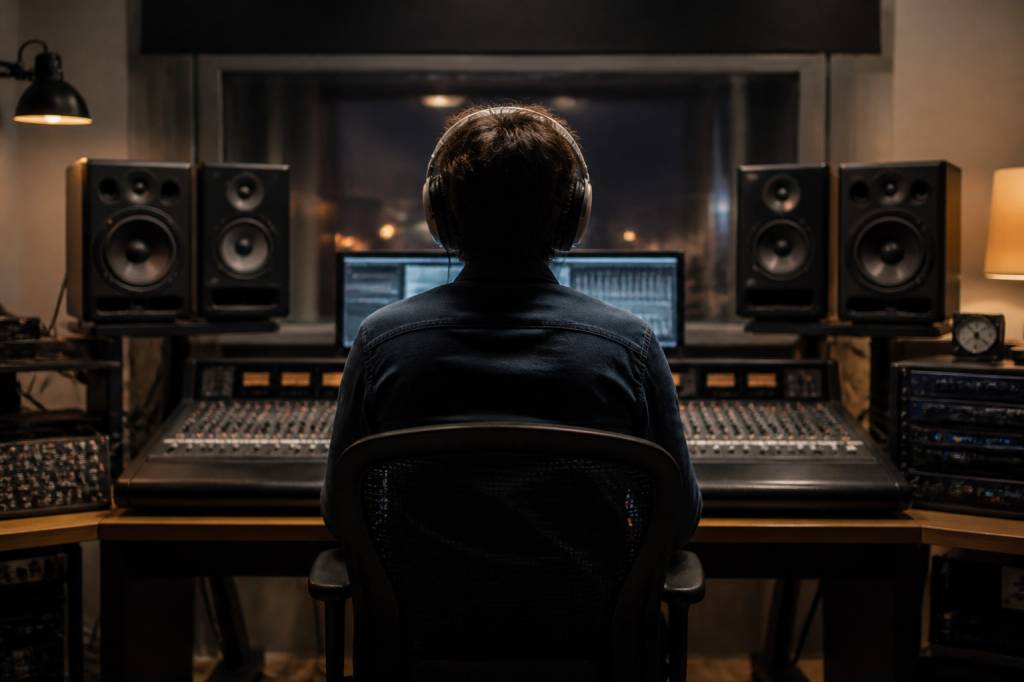
Modern music did not emerge from a single revolution. It was built through a series of shocks: new recording technologies, rebellious sounds, unexpected collaborations and songs that changed what audiences believed popular music could be. Some tracks altered production. Others transformed the business, expanded cultural representation or turned a niche movement into a global language.
Choosing only ten songs is inevitably subjective. The list below is not a ranking of the “best” recordings ever made. It is a map of influence: ten pivotal songs that helped reshape songwriting, studio technique, genre boundaries and the relationship between artists and their audiences.
“I Want to Hold Your Hand” — The Beatles (1963)
The Beatles had already established themselves in the United Kingdom when “I Want to Hold Your Hand” became the record that opened the American market. Released in December 1963, it reached No. 1 in the United States in early 1964, just before the group’s first appearance on The Ed Sullivan Show. More than 70 million Americans watched that broadcast, according to widely cited Nielsen estimates.
The song itself is remarkably direct: bright guitars, handclaps, tightly arranged harmonies and a chorus designed for instant participation. That apparent simplicity was strategic. Lennon and McCartney wrote a track that could cross regional and cultural boundaries without losing the energy of British beat music.
Its impact went beyond the band’s sales. “I Want to Hold Your Hand” helped trigger the British Invasion, bringing British artists such as The Rolling Stones, The Kinks and The Who into the American mainstream. It also demonstrated the growing power of television as a music-discovery platform. The single did not merely become a hit; it showed record labels that youth culture could be exported at extraordinary speed.
“A Day in the Life” — The Beatles (1967)
If “I Want to Hold Your Hand” represented pop music’s commercial breakthrough, “A Day in the Life” represented its artistic expansion. The closing track on Sgt. Pepper’s Lonely Hearts Club Band, released in 1967, fused two contrasting Lennon and McCartney sections into a deliberately disorienting whole.
The recording moves from a restrained, newspaper-inspired narrative to a dramatic orchestral crescendo, then returns to McCartney’s lighter middle passage before erupting again. The famous orchestral glissando was performed by a large ensemble instructed to move from the lowest to the highest note of its instruments. The result was less a conventional arrangement than a controlled studio event.
Producer George Martin and engineer Geoff Emerick treated the studio as an instrument. Tape manipulation, orchestral overdubs and unconventional structure became central to the song’s identity. The recording helped establish the album as a serious artistic format rather than a simple collection of singles.
That shift remains fundamental to modern music. From progressive rock to hip-hop, electronic music and alternative pop, countless artists have used the studio not just to document performance, but to construct an environment that could not exist onstage.
“What’s Going On” — Marvin Gaye (1971)
Motown was built on precision, discipline and commercial consistency. “What’s Going On” challenged all three. Marvin Gaye’s 1971 single addressed war, racial injustice, police violence and social division through a sound that was both deeply political and musically inviting.
The song emerged from a conversation between Motown artist Renaldo “Obie” Benson and songwriter Al Cleveland, inspired in part by the violence surrounding protests in Berkeley, California. Gaye later helped shape the lyrics and performance. Berry Gordy initially resisted releasing the track, reportedly calling it too political. When the single was finally issued, it became a major success, reaching No. 2 on the Billboard Hot 100.
Its production was just as influential as its message. Layered vocals, jazz-influenced harmony, field-recording textures and a relaxed rhythm section created a sound far removed from the tight pop-soul formula associated with Motown. Gaye’s voice seems to float between personal grief and collective testimony.
“What’s Going On” showed that socially conscious music could be sophisticated, commercially viable and emotionally nuanced. It remains a reference point for artists who want to address political realities without sacrificing musical depth.
“Rapper’s Delight” — The Sugarhill Gang (1979)
Hip-hop existed before “Rapper’s Delight,” but this record introduced its vocabulary to a mass audience. Released by the Sugar Hill label in 1979, the track adapted the instrumental groove of Chic’s “Good Times,” performed by a live studio band rather than sampled directly from the original recording.
At more than fourteen minutes in its extended version, “Rapper’s Delight” was unusually long for a commercial single. Its lyrics moved through boasts, jokes, references and rhythmic displays, presenting rapping as a form of performance in its own right. The song reached the Top 40 in the United States and became an international hit.
Its importance is not limited to chart placement. The track connected the Bronx block-party tradition to the record industry. DJs, MCs, dancers and graffiti artists had already developed hip-hop as a local culture, but “Rapper’s Delight” provided a commercial doorway.
The record also raises an important question about music history: who gets credited when a community creates a movement and another group becomes its first major representative? The Sugarhill Gang helped popularize hip-hop, but the genre’s foundations were built by DJs such as Kool Herc, Afrika Bambaataa and Grandmaster Flash, among many others. “Rapper’s Delight” was the breakthrough, not the beginning.
“Billie Jean” — Michael Jackson (1982)
“Billie Jean” changed the scale of pop stardom. Released on Michael Jackson’s Thriller in 1982, the song combined a tense bassline, sharply edited drums, minimalist keyboard parts and Jackson’s intensely controlled vocal performance.
Producer Quincy Jones reportedly wanted to change the title because he feared confusion with tennis star Billie Jean King. Jackson fought to keep it. The decision proved significant: the name became inseparable from one of the most recognizable songs in modern pop.
The track’s cultural impact expanded through its video and live performances. MTV had launched in 1981, but its programming was initially criticized for underrepresenting Black artists. The success of “Billie Jean” and “Thriller” helped force a broader rotation of Black pop and R&B performers. Jackson’s performance of the moonwalk during the 1983 television special Motown 25 further cemented the connection between recorded music, choreography and global celebrity.
“Billie Jean” also demonstrated how production could create psychological tension with very few elements. The bassline does not rush; it stalks. The arrangement leaves space, allowing every percussive detail to register. Contemporary pop producers still study that balance between restraint and impact.
“Blue Monday” — New Order (1983)
“Blue Monday” was a landmark because it made electronic dance music feel both mechanical and emotionally human. New Order combined sequenced synthesizers, drum machines, sampled percussion and Peter Hook’s melodic bass playing into a track that was unusually long, repetitive and structurally unconventional for mainstream radio.
The song emerged from the post-punk environment but drew heavily from club music, particularly the work of producers such as Giorgio Moroder and artists associated with New York’s early electronic scene. Its 12-inch format was crucial. Rather than compressing the song into a three-minute pop structure, New Order allowed the groove to develop gradually for the dance floor.
“Blue Monday” became one of the best-selling 12-inch singles of all time, although the original sleeve was so expensive to manufacture that the band reportedly lost money on some copies. It is an excellent reminder that commercial success does not automatically translate into healthy margins.
The song’s influence can be heard across synth-pop, techno, house, industrial music and contemporary electronic pop. Its central idea remains strikingly modern: emotion does not have to come from a live drummer or a traditional rock arrangement. Machines can create tension, momentum and melancholy too.
“Straight Outta Compton” — N.W.A (1988)
With “Straight Outta Compton,” N.W.A turned regional experience into an uncompromising national statement. The title track of the group’s 1988 debut album presented Compton, California, through aggressive production and confrontational lyrics that reflected distrust of police and institutional authority.
The group’s language was deliberately provocative. So was its refusal to soften the realities it described for mainstream listeners. The FBI sent a letter to Ruthless Records objecting to the group’s depiction of law enforcement, an episode that reinforced the song’s notoriety and visibility.
Commercial radio largely resisted the track, yet the album became a major success through independent distribution, street promotion and word of mouth. This was a critical moment for hip-hop’s relationship with the music industry. A record did not need full radio support to build a substantial audience if its cultural relevance was strong enough.
“Straight Outta Compton” also helped establish gangsta rap as a dominant force in the late 1980s and 1990s. Its legacy is complex. The music offered social testimony and economic opportunity, but it also intensified debates around misogyny, violence and the responsibilities of record companies marketing controversial material. Its influence cannot be separated from those tensions.
“Smells Like Teen Spirit” — Nirvana (1991)
Few songs changed the mainstream as quickly as “Smells Like Teen Spirit.” Released in 1991, the opening track from Nirvana’s Nevermind moved grunge from Seattle’s independent scene into global pop culture.
The song’s structure was familiar—quiet verses, explosive choruses—but its execution was raw and volatile. Kurt Cobain’s guitar riff was simple enough to remember instantly, while producer Butch Vig’s recording gave the band a forceful, polished sound without eliminating its abrasive edges. Dave Grohl’s drumming was particularly central to the track’s physical impact.
“Nevermind” eventually displaced Michael Jackson’s Dangerous at the top of the Billboard 200 in January 1992. That chart movement symbolized more than a change in popular taste. It showed that alternative rock could become the center of the industry rather than remain a specialist market.
The song also altered the visual language of music television. Its video presented a chaotic school gymnasium populated by bored teenagers, translating the band’s alienation into a highly marketable image. Ironically, the anti-establishment anthem became a defining product of a major-label system. That contradiction is part of its story—and part of its enduring appeal.
“Juicy” — The Notorious B.I.G. (1994)
“Juicy” helped redefine what a rap success story could sound like. Built around a prominent sample of Mtume’s “Juicy Fruit,” the track placed The Notorious B.I.G.’s autobiographical verses over a warm, accessible groove. Released in 1994, it transformed personal history into a polished pop record without stripping away the details of poverty, ambition and survival.
Biggie’s delivery is conversational but meticulously rhythmic. He moves from childhood hardship to recording-industry success, framing upward mobility as both dream and evidence. The line between celebration and reflection remains deliberately blurred.
The production also represents the growing sophistication of sample-based hip-hop. Producers were no longer treating samples merely as loops; they were using them to establish emotional context, connect generations and create recognizable hooks. “Juicy” made that strategy especially effective because its source material sounded joyful while the verses carried greater weight.
The track helped make East Coast hip-hop a dominant commercial force in the 1990s and strengthened the album-driven identity of rap. It also established a template for later artists: tell the story of where you came from, acknowledge the machinery that helped you escape, and make the chorus impossible to forget.
“Get Ur Freak On” — Missy Elliott (2001)
At the beginning of the 2000s, “Get Ur Freak On” sounded like it had arrived from several futures at once. Produced by Timbaland and released on Missy Elliott’s Miss E… So Addictive, the track used a looping South Asian-inspired melodic phrase, jagged percussion, deep bass and Elliott’s elastic vocal delivery.
The song was unusual without becoming inaccessible. Its hook was repetitive, physical and instantly memorable, while the production refused the smoothness associated with much turn-of-the-century R&B. Timbaland’s approach treated rhythm as the main event, leaving melody to function as texture and punctuation.
Its international influences also reflected a changing pop marketplace. Global sounds were increasingly entering mainstream production, although the industry’s use of non-Western musical elements often raised questions about credit, context and appropriation. “Get Ur Freak On” remains influential precisely because it made rhythmic experimentation feel commercially viable.
The accompanying video, directed by Dave Meyers, amplified the song’s strange, kinetic identity. Missy Elliott did not simply perform within a visual concept; she helped build a complete audiovisual world. Contemporary pop, from experimental R&B to hyperpop, owes much to that willingness to make eccentricity central rather than decorative.
“Royals” — Lorde (2013)
“Royals” arrived as an antidote to the excesses of early-2010s pop. Lorde’s debut single, co-written with Joel Little, used sparse percussion, deep electronic bass and an understated vocal performance to question the luxury imagery common in mainstream music videos and lyrics.
The song’s perspective was specific: Lorde was a teenager from New Zealand observing a pop culture built around American wealth and celebrity. Its critique was not delivered through a protest anthem, but through cool distance and careful phrasing. That made it easy to consume while still challenging the assumptions behind its subject.
“Royals” reached No. 1 on the Billboard Hot 100 and won Song of the Year and Best Pop Solo Performance at the 2014 Grammy Awards. Its success demonstrated that a minimal arrangement and an unconventional teenage voice could compete with heavily produced radio pop.
The influence was immediate. Labels and producers became more receptive to sparse, moody arrangements, bedroom-pop aesthetics and artists who appeared less manufactured. “Royals” did not end maximalist pop, but it widened the commercial space for restraint. In an industry often obsessed with bigger choruses and louder production, silence suddenly had market value.
Why These Songs Still Matter
Across six decades, these recordings reveal several recurring forces. Technology repeatedly changes the rules: multitrack studios, drum machines, sampling, music television and digital production all expanded the possible shape of a hit. At the same time, cultural context remains decisive. A new sound becomes historically important when it expresses a social mood, gives a community greater visibility or challenges an established gatekeeper.
These songs also show that influence is rarely clean or linear. “Rapper’s Delight” popularized a culture it did not create. “Straight Outta Compton” turned local testimony into a national controversy. “Royals” criticized luxury pop while becoming a global commercial product. The music industry absorbs disruption quickly—sometimes by amplifying it, sometimes by repackaging it.
That is why the most important songs are not always the most technically complex. They are the tracks that make a new idea feel inevitable after the fact. A different kind of chorus, a stranger rhythm, a sharper political line or a more economical production choice can alter the direction of popular music. The next decisive song may already be circulating somewhere beyond the industry’s usual radar. The real question is whether the gatekeepers will recognize it before the audience does.