

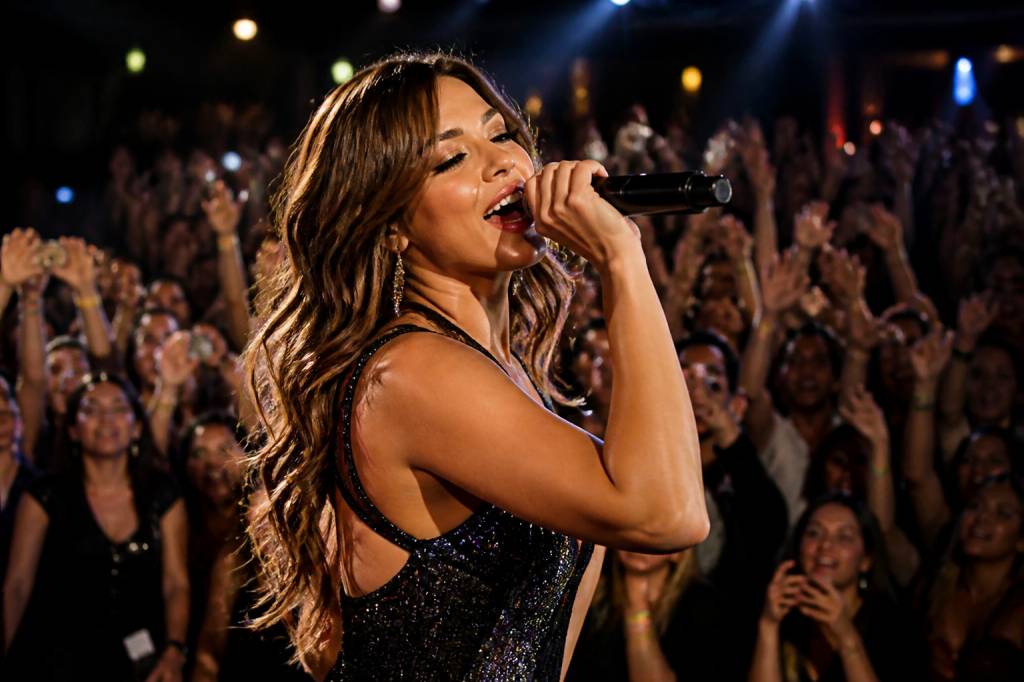
Billboard hits do more than fill playlists. The right song can redraw the map of pop music, shift the sound of radio, and force the industry to chase a new formula. Some tracks topped the charts because they were catchy. Others changed what “catchy” even meant. The ten songs below didn’t just perform well on Billboard; they helped define modern pop’s structure, aesthetics, and commercial logic.
This is not a nostalgia trip. It’s a look at the records that still echo in today’s releases, from hyper-polished maximalism to genre-blending, from vocal precision to dance-floor minimalism. If you want to understand why current pop sounds the way it does, start here.
Michael Jackson — “Billie Jean”
Released in 1983, “Billie Jean” was more than a chart hit. It was a masterclass in pop architecture. The bassline is instantly recognizable, the groove is tight, and the production is built around tension rather than excess. That restraint mattered. Modern pop still borrows from this blueprint: a lean arrangement, a central hook, and a vocal performance that carries both control and drama.
The song also benefited from a key cultural shift: MTV finally giving Black artists the visibility they deserved, with Jackson’s “Billie Jean” performance helping break the channel’s early barriers. Pop became more visual, more cinematic, and more globally marketable. That legacy is still obvious every time a pop star releases a tightly choreographed, high-concept video designed to dominate both screens and charts.
Madonna — “Like a Virgin”
Madonna understood something crucial: pop is not only music, it is branding, provocation, and control. “Like a Virgin” reached No. 1 on the Billboard Hot 100 and turned her into a cultural force. The song itself is deceptively simple, but its impact lies in how it fused hook-heavy pop with persona-driven storytelling.
Modern pop stars still work in the space Madonna helped build. The music has to hit, yes, but the image has to hit harder. The album cycle, the reinvention, the talking points, the controversy that somehow becomes part of the campaign — all of it traces back to this era. Madonna made pop feel strategic. That changed the business as much as the sound.
Whitney Houston — “I Wanna Dance with Somebody (Who Loves Me)”
If you want a direct line from 1980s pop to today’s euphoric, stadium-sized choruses, this is it. Whitney Houston’s “I Wanna Dance with Somebody” is engineered for emotional release. The production is bright, the tempo is relentless, and the vocal performance is the kind of technical excellence modern pop still chases, often with fewer results.
The song also showed that a huge pop single could balance polish and feeling without sacrificing either. That balance remains the industry’s obsession. Whether it’s Dua Lipa, Sabrina Carpenter, or any artist aiming for mass appeal, the formula is familiar: an irresistible beat, a vocal that sounds effortless but isn’t, and a chorus that lands like a flashbulb.
Prince — “When Doves Cry”
Prince’s “When Doves Cry” was a risk that paid off in a very large way. It hit No. 1 on Billboard and did so without a bass line, which, for a pop hit, is almost a dare. The song’s sparse arrangement, emotional volatility, and genre-fluid identity helped push mainstream pop away from rigid formulas.
That matters because modern pop thrives on hybridity. Artists now move between pop, R&B, funk, and electronic influences with little resistance, but “When Doves Cry” helped normalize that fluidity at the highest commercial level. It proved that a top-charting song didn’t need to be sonically conventional. It needed to be undeniable.
Mariah Carey — “Fantasy”
When “Fantasy” became the first song by a female artist to debut at No. 1 on the Billboard Hot 100, it changed more than the record books. It signaled that pop was entering an era where release strategy mattered as much as radio momentum. That debut was not just a chart feat; it was a release-model breakthrough.
Musically, the song’s blend of pop and hip-hop was equally important. The remix with Ol’ Dirty Bastard was a landmark moment in cross-genre collaboration. Today’s pop landscape is built on this logic. A chart hit often needs an R&B feature, a rap verse, or a genre crossover built into the DNA. Mariah helped make that standard, not special.
Britney Spears — “…Baby One More Time”
Few debut singles have had this level of impact. Britney Spears arrived in 1998 with a song that looked like teen pop on the surface and functioned like a pop industry reset underneath. The track went straight to No. 1 and launched a blueprint for the late-’90s and early-2000s teen-pop explosion.
What made it stick? A brutally efficient chorus, a high-gloss production style, and an image that was carefully calibrated for maximum visibility. The song helped define the MTV-era pop machine at its peak. More importantly, it showed that teen pop could be commercially massive without sounding disposable. Every generation since has had its version of this moment, and the comparison still starts here.
Destiny’s Child — “Say My Name”
“Say My Name” is one of those songs that quietly rewired pop and R&B at the same time. It reached No. 1 on Billboard and showcased a sharper, more conversational kind of pop performance. The production is sleek, but the real power is in the vocal arrangement and the lyrical suspicion running through the song.
This is one reason the track still feels modern. It treats personality and storytelling as central, not decorative. Contemporary pop increasingly relies on this blend of emotional specificity and radio-friendly structure. In other words: the song has to sound good in your headphones, but it also has to sound like it knows something about your life.
OutKast — “Hey Ya!”
“Hey Ya!” is a perfect example of a song that sounded strange, then universal, then unavoidable. It hit No. 1 on Billboard and blurred genre lines in a way that still feels ahead of its time. On paper, it should not have worked as a mainstream pop smash. In practice, it became one of the defining singles of the 2000s.
Its influence is enormous. It opened more room for eccentric production choices, odd song structures, and genre experimentation in the mainstream. Modern pop’s willingness to embrace weirdness — from chopped-up vocal textures to abrupt production switches — owes a lot to songs like this one. Pop became less about fitting the mold and more about bending it just enough to catch fire.
Katy Perry — “Teenage Dream”
Katy Perry’s “Teenage Dream” was one of the clearest examples of pop done with ruthless efficiency. It was engineered for replay value, and it delivered. The song became a cornerstone of one of the most dominant pop eras of the 2010s and helped set the standard for the shiny, hook-dense, emotionally legible pop that followed.
What it shaped most was expectation. By the early 2010s, a major pop single needed to be bright, immediate, and nearly impossible to forget after one listen. “Teenage Dream” nailed that formula without sounding cynical. That distinction matters. The song helped make precision pop feel joyful again, not just optimized.
Adele — “Rolling in the Deep”
At a time when pop was becoming increasingly digital and dance-driven, Adele showed that a massive hit could still be built on vocal power and emotional gravity. “Rolling in the Deep” hit No. 1 on Billboard and became a global monster, proving that big singing was still commercially viable in the streaming age’s early years.
The song’s influence is easy to miss because it’s so ubiquitous. But it helped reopen space for powerhouse vocal performances in a market increasingly dominated by processed textures and club-focused production. It reminded the industry that drama, soul, and live-feeling intensity still sell — and still stream.
Lil Nas X — “Old Town Road”
“Old Town Road” is the most recent song on this list, and maybe the clearest sign of where modern pop has gone. It smashed Billboard records, fueled endless debate about genre classification, and turned meme culture into a chart strategy. The track’s viral ascent was not a gimmick. It was a preview of the new pop economy.
The song changed the rules around what a hit can look like. It did not arrive through traditional radio-first pathways. It spread through internet culture, remix logic, and audience participation. That model now shapes how major labels think about release plans, platform timing, and cross-platform virality. If older pop hits were built for radio, “Old Town Road” was built for the internet — and then everything else caught up.
What these hits tell us about modern pop
Look at these ten songs together and the pattern is clear. Modern pop is built on a few non-negotiables: a strong hook, a distinct identity, and enough flexibility to absorb influence from other genres without losing mass appeal. Billboard success has never been purely about sonic quality, but these records show how chart dominance and cultural permanence often overlap.
They also reveal a bigger truth about the pop industry: the hit is no longer just a song. It is a product, a visual package, a social object, and sometimes a meme. A chart hit can reshape fashion, video aesthetics, release strategy, and even the way listeners define genre. That’s a lot of pressure for three minutes of music. Yet these songs handled it — and, in doing so, helped define the pop we hear now.
So the next time a new single climbs the Billboard chart and the internet starts arguing over whether it sounds “fresh” or “derivative,” remember this: every era of pop is built on a few records that changed the rules. These ten did exactly that.